Water quality in aquaculture
Overall Course Objectives
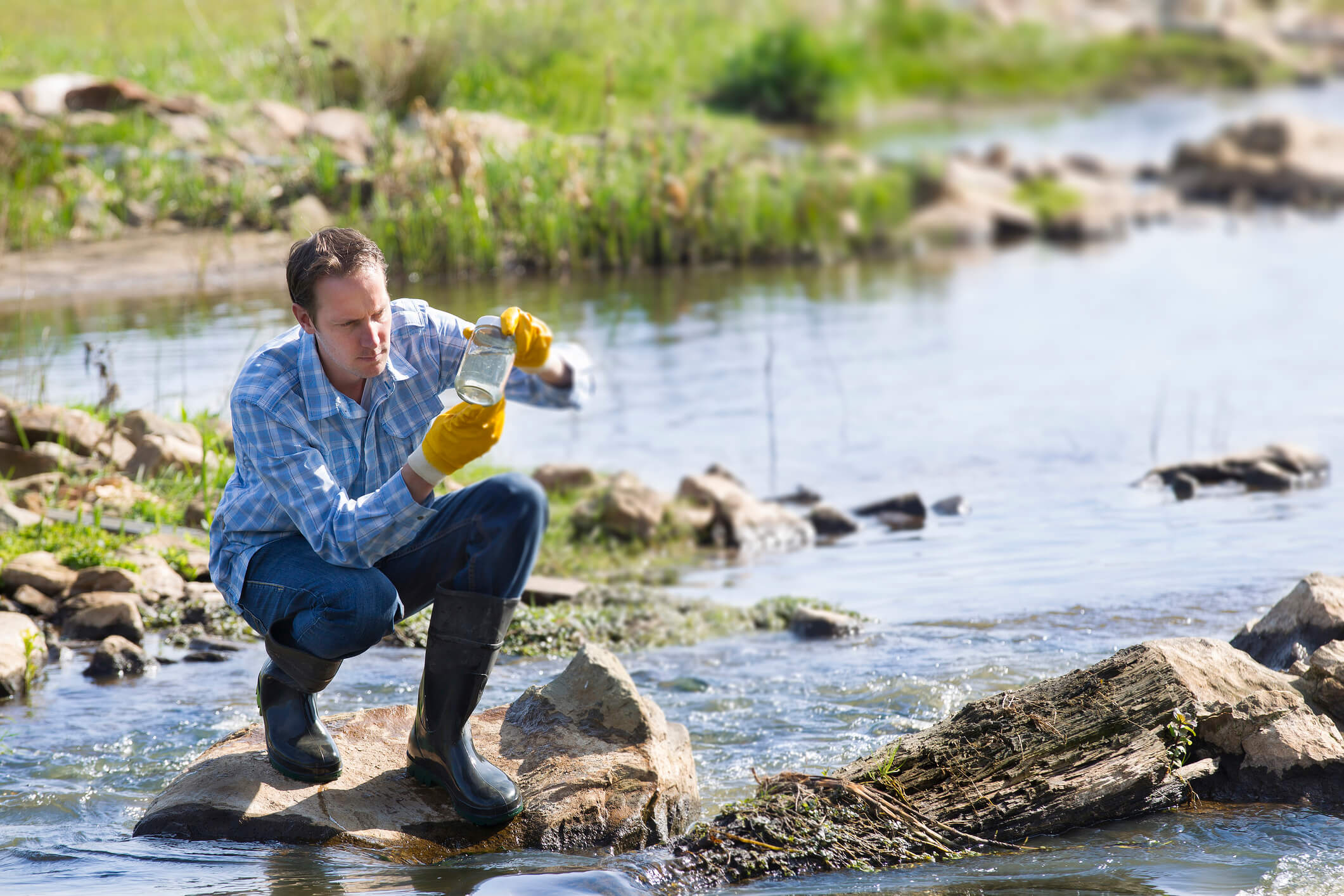
The overall aim of the course is to provide students with an understanding on water quality parameters in aquaculture environment: physical and chemical variables, fundamental chemical concepts and their relation to aquaculture water quality, and microbial groups and processes and their connections to physical and chemical water quality. Through theoretical and practical exercises, students should be allowed to analyze and interpret changes in water quality in aquaculture systems.
See course description in Danish
Learning Objectives
- Apply laboratory safety principles and good scientific practice in water chemistry analyses.
- Describe fundamental chemistry concepts related to aquaculture water quality.
- Calculate masses, concentrations, and dilutions of substrates and chemical reaction rates.
- Interpret and analyse redox equations and reaction stoichiometry.
- Explain the connections between microbial groups and processes and physical and chemical water quality.
- Select and justify appropriate water quality parameters for monitoring and analysing water quality in aquaculture facility
- Design , conduct, and evaluate small-scale laboratory experiments and field sampling in aquaculture facilities
- Integrate physical, chemical, and biological data to diagnose and predict changes in aquaculture water quality
Course Content
Water quality management in aquaculture is important, as the organisms produced in aquaculture systems, such as fish, shellfish, or algae, are sensitive to changes in physical, chemical, and biological parameters. Therefore, the water quality must be monitored and controlled to ensure good health, productivity, and quality of the organisms produced. This course consists of lectures providing the theoretical background on water quality parameters and fundamental processes, laboratory demonstrations and exercises to get hands-on experience on measuring water quality, and calculation exercises and group work assignments, where the theory is applied into real-life aquaculture conditions.
Teaching Method
Lectures, individual and group exercises (calculations, problem solving exercises, and oral and written assignments), laboratory exercises.
Faculty
Questions about the course content?
Contact Sanni-Leea Hellevi Aalto

Practical questions (e.g. sign-up)?
Contact DTU Learn for Life
Related educations
-
 Enkeltfag
Engelsk
5 ECTS
Enkeltfag
Engelsk
5 ECTS
Medicinsk billedanalyse
- Duration
- 13 uger
- Price
- 9.250,00 DKK
-
 Enkeltfag
Engelsk
5 ECTS
Enkeltfag
Engelsk
5 ECTS
Materialernes optiske egenskaber
- Duration
- 13 uger
- Price
- 9.250,00 DKK
-
 Enkeltfag
Engelsk
5 ECTS
Enkeltfag
Engelsk
5 ECTS
Beslutningsstøtte og strategisk vurdering
- Duration
- 13 uger
- Price
- 9.250,00 DKK
-
 Enkeltfag
Engelsk
2.5 ECTS
Enkeltfag
Engelsk
2.5 ECTS
Advances in Chemical and Biochemical Engineering
- Duration
- 13 uger
- Price
- 12.350,00 DKK